

Seed Probiotics : Improve Gut Health Naturally
Seed Probiotics – Improve Gut Health Naturally is an approach to wellness that’s generating buzz in the health community. Proper gut health is essential for digestion, immunity, and overall well being, and Seed’s Daily Synbiotic promises to support these naturally through a potent blend of probiotics and prebiotics. In this article, we’ll explore what Seed probiotics are, how they work, their benefits, ingredients, side effects, and whether they live up to the hype. By the end, you’ll have a clear understanding of how Seed Probiotics: Improve Gut Health Naturally and whether this science backed supplement is right for you.
What Is Seed Probiotics?
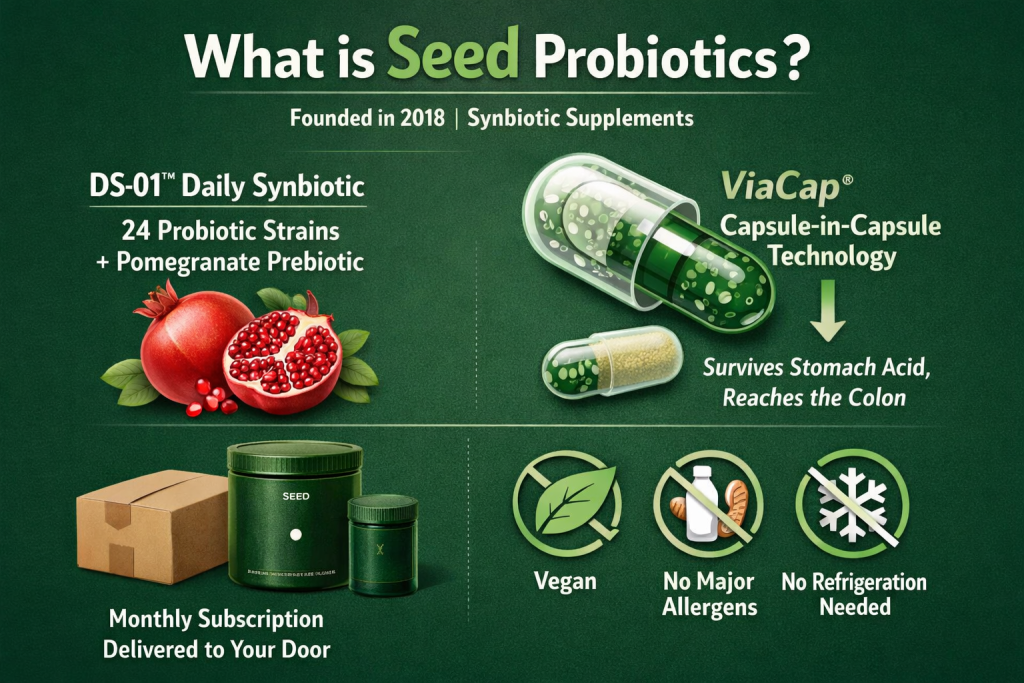
Seed is a health company , founded in 2018 that specializes in broad spectrum synbiotic supplements (synbiotic = probiotic + prebiotic). Their flagship product, DS-01 Daily Synbiotic, is a probiotic supplement formulated with 24 different strains of beneficial bacteria plus a natural prebiotic made from pomegranate. Unlike many generic probiotics, Seed’s DS-01 is delivered via a capsule in capsule technology called ViaCap® that helps the live bacteria survive stomach acid and reach the colon. Seed is a subscription based service, meaning you receive a monthly supply of capsules delivered to your door for convenience. The product is vegan, free of major allergens, and does not require refrigeration, thanks to its innovative design.
Key Benefits of Seed Probiotics
Seed probiotics are designed to improve gut health naturally and provide whole body benefits. According to the company and clinical research, users may experience several positive outcomes:
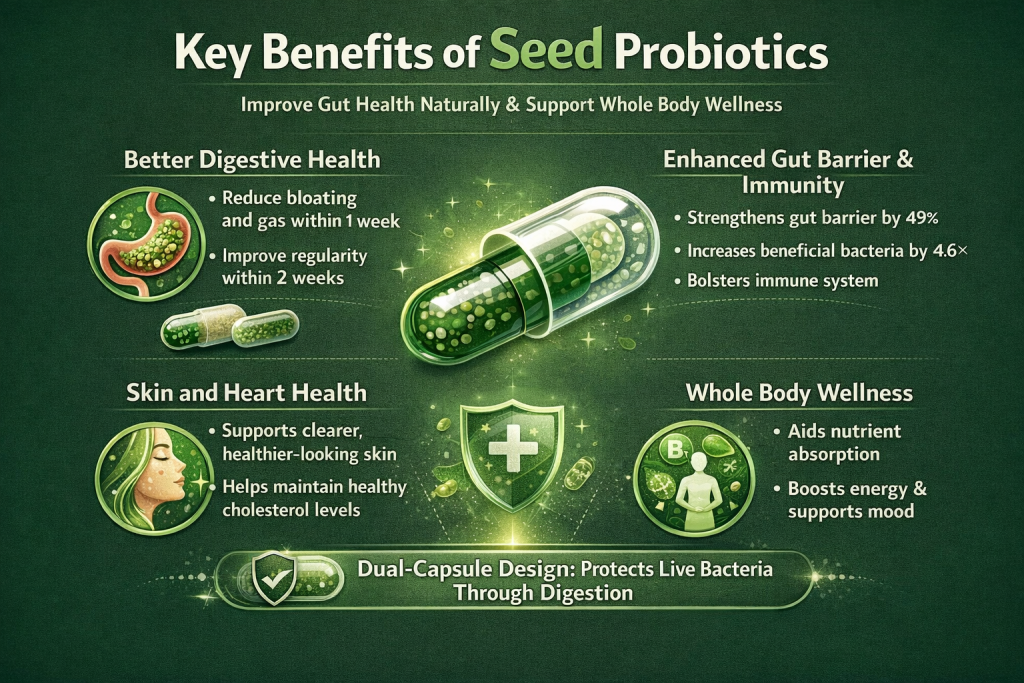
- Better Digestive Health: Many take Seed probiotics for gut health to relieve bloating, gas, and irregularity. In fact, Seed claims their DS-01 Daily Synbiotic can “reduce bloating and gas within 1 week” and “improve regularity and make digestion easier within 2 weeks”. Users often report more comfortable digestion and regular daily bowel movements after starting Seed. One Healthline reviewer even noted a reduction in IBS related bloating and cramping after using Seed.
- Enhanced Gut Barrier & Immunity: Seed’s probiotic strains support the gut barrier integrity and immune function. A healthier gut lining means a stronger defense against harmful microbes and toxins. The product has been shown in a 12 week study to increase beneficial gut bacteria by 4.6× and strengthen the gut barrier by 49%. By improving the gut microbiome, Seed probiotics also help bolster your immune system’s resilience, since a large part of our immunity is associated with gut health.
- Skin and Heart Health: Uniquely, Seed’s formulation targets more than digestion. Certain strains in DS-01 are included for dermatological health the “gut skin axis” and cardiovascular health. This means Seed probiotics may support clearer skin (some users notice improvements in issues like acne or eczema) and even help maintain healthy cholesterol levels. For example, strains like Bifidobacterium longum have been linked in research to improved skin condition and Lactobacillus plantarum to modest improvements in cholesterol. While more research is needed, Seed’s inclusion of these strains is aimed at providing extra benefits beyond the gut.
- Whole Body Wellness: By restoring balance to the microbiome, Seed Probiotics help with nutrient absorption and even micronutrient synthesis. The product includes a Micronutrient Synthesis probiotic blend intended to aid production of vitamins like B12 and folate in the gut. Many people taking Seed report feeling improvements in energy levels, mood, and overall wellness—likely as an indirect result of better gut function and reduced GI discomfort.
The capsules use a unique 2 in 1 design: an inner probiotic capsule nested inside a prebiotic outer capsule, which helps Seed Probiotics: Improve Gut Health Naturally by delivering bacteria alive to the colon.
In summary, the Seed probiotics benefits range from improved digestion and comfort to broader impacts like skin clarity, immune support, and heart health. These benefits make Seed’s approach stand out in the probiotic market.
Ingredients and How It Works
Seed DS 01 Daily Synbiotic contains 24 clinically studied probiotic strains that are grouped into four categories: digestive health, dermatological (skin) health, heart health, and micronutrient synthesis. Each capsule provides a whopping 53.6 billion AFU (Active Fluorescent Units) of bacteria per daily dose. Notably, Seed uses the AFU measure instead of the more common CFU; AFU counts all viable and active cells (including those unculturable on a petri dish) and is considered a more precise metric of probiotic potency. In practical terms, this means you’re getting a high dose of live beneficial microbes in each serving.
Key probiotic strains and ingredients include:
- Digestive Health Blend: 14 strains of Bifidobacterium and Lactobacillus species that target gut function, regularity, and gut barrier integrity. For example, Bifidobacterium longum and Lactiplantibacillus plantarum in Seed’s formula are known to help with digestion and even have been studied for cholesterol and blood pressure support. This blend (37 billion AFU) is the core that helps Seed probiotics improve gut health naturally by balancing the gut microbiome.
- Dermatological Blend: 5 strains (3.3 billion AFU) including L. salivarius and B. lactis that are linked to skin health. These may influence skin clarity and hydration via the gut skin axis. Early research suggests probiotics can help conditions like acne or eczema by reducing inflammation.
- Cardiovascular Blend: 2 strains (5.25 billion AFU) targeted at heart and metabolic health, such as Lactiplantibacillus plantarum SD-LPLDL which has shown an ability to help lower LDL cholesterol in studies. This reflects Seed’s unique angle of making a probiotic that’s not just for digestion but for systemic benefits.
- Micronutrient Blend: 2 strains (8.05 billion AFU) including Bifidobacterium adolescentis that can produce vitamins like B12 and folate in the gut. This could help support nutrient levels and metabolic functions.
- Prebiotic: Instead of using a typical fiber like inulin (which can cause gas for some people), Seed uses a non fermenting prebiotic derived from Indian pomegranate (400 mg). This patented outer capsule made of punicalagins , pomegranate polyphenols feeds the probiotic bacteria and is gentle on those with sensitive digestion or on low FODMAP diets. The prebiotic also has antioxidant properties.
- Other Ingredients: The capsule is entirely vegan and infused with chlorophyllin, which gives it a dark green color. The green capsule isn’t just for looks – it actually helps protect sensitive bacteria from light and stomach acid. The formulation contains no binders or fillers, and it’s free of common allergens , gluten, dairy, soy, nuts, shellfish, sesame, etc. as verified by extensive testing.
How does Seed differ from other probiotics? The ViaCap® delivery system is a big part of how it works. Essentially, each dose is a capsule within a capsule: the outer capsule holds the prebiotic and also creates a protective barrier, while the inner capsule contains the probiotic strains. This design was shown in a simulated digestive system study to protect the probiotics through the harsh acidic stomach environment, delivering a much larger number of live bacteria to the colon compared to standard capsules. In fact, a Seed funded lab study found ViaCap resulted in >50× more viable cells reaching the colon than the industry standard capsule. While that’s one of Seed’s own studies, it underscores the emphasis on ensuring the bacteria actually survive to do their job a common issue with many probiotic supplements.
Seed also stands out by being highly science driven. The company invests in clinical research and has at least four ongoing or completed double blind clinical trials on their formulations. Everything from strain selection to quality testing is done with an evidence based approach. For example, Seed conducts over 50 quality checkpoints and tests its products for 500+ pesticides and allergens to ensure safety.
Seed Probiotics vs. Other Probiotics
With so many probiotics on the market, what makes Seed DS-01 Daily Synbiotic different? Here are a few points of comparison:
- Comprehensive Formulation: Most over the counter probiotics might contain a handful of strains , often 1 to 6 strains and focus solely on gut bacteria counts. Seed includes 24 strains covering multiple areas of health, truly a broad spectrum approach. Competing products like Ritual’s Synbiotic+ or others typically have far fewer strains and lower bacterial counts. For instance, Ritual’s has 2-3 strains and around 11 billion CFU, whereas Seed provides 24 strains and 53+ billion AFU. This diversity can be important because a more diverse gut microbiome is generally linked to better health.
- Prebiotic + Probiotic Combo: Seed is a synbiotic, meaning it pairs prebiotics with probiotics. Many standard probiotics are just bacteria in a capsule, which might not flourish without adequate prebiotic “food.” Seed’s built in prebiotic from pomegranate nourishes the good bugs and also has antioxidant benefits, giving it an edge over basic probiotics that lack a prebiotic component.
- Survivability: As mentioned, the ViaCap capsule technology is a differentiator. Many probiotics get destroyed by stomach acid or don’t make it deep into the gut. Seed engineered their capsules to survive digestion (they don’t dissolve until reaching the colon). This is a critical factor a probiotic is only as good as the bacteria that actually reach your intestines alive. Some other brands use tricks like enteric coatings or extra high CFU counts to tackle this, but Seed’s method is novel and has some research backing it.
- Scientific Validation: Seed actively works with scientists and has clinical trials in progress for their product’s effectiveness on gut health and IBS. Not all supplement companies invest in studies to this extent. Moreover, Seed’s strains are all strain specific and transparently labeled. This transparency and tie to scientific literature sets them apart, the National Institutes of Health (NIH) criteria for a good probiotic include using clinically supported strains, delivering effective doses, and clear labeling, and “Seed is a good probiotic as it meets these key criteria” according to a Healthline review.
- Subscription Model & Freshness: Seed is typically only available via subscription or select retail partners like their website or recently Target. This ensures you get a fresh supply monthly and never use expired or old stock. Other probiotics on store shelves may sit for long periods, potentially losing potency if not stored properly. Seed’s model also enables them to use sustainable packaging which is an environmental plus. The downside is you can’t just pick it up at any grocery store and the cost is on the higher end .
In summary, Seed positions itself as a premium, scientifically advanced probiotic. While it is pricier than generic brands, the value comes from its robust formula, unique delivery system, and commitment to validated results. If you compare Seed probiotics vs other probiotics, you’re essentially comparing a whole wellness ecosystem, Seed calls it “whole body microbiome support” to a basic digestive aid. Depending on your health goals and budget, that may well be worth it.
Dosage and How to Use Seed Probiotics
Taking Seed’s Daily Synbiotic is simple. The recommended dosage is 2 capsules once daily, preferably on an empty stomach. Seed advises taking the two capsules together first thing in the morning or before bed for best results , empty stomach helps maximize survival of the probiotics by minimizing exposure to harsh digestive enzymes. Each bottle contains 60 capsules, which is a 30 day supply at the full dose.
Onboarding Tip: If you’re new to probiotics or have a sensitive stomach, Seed actually recommends a short ramp up period. In the first 3 days, start with 1 capsule per day, then increase to the full 2 capsules per day from Day 4 onwards. This gradual introduction can help your body adjust and reduce the likelihood of any initial digestive discomfort.
It’s best to be consistent and take Seed daily. Skipping days could slow down the benefits, as probiotics likely need continuous presence to maintain their positive effects in your gut. Many users incorporate Seed probiotics into their morning routine for example, taking it with a glass of water right after waking. The good news is the capsules are shelf stable and do not require refrigeration, so you can keep the jar on your counter or desk as a reminder.
As with any supplement, follow the usage instructions provided. Two capsules a day is the target dose; taking more is not necessary and won’t necessarily provide extra benefit . Likewise, taking less might still yield some benefit but not the full intended effect, so try to work up to the full dose if you can.
Potential Side Effects and Safety
When introducing any probiotic, including Seed, it’s possible to experience some mild side effects initially. The good news is that Seed probiotics side effects are generally minimal and temporary for most people. According to the company, it’s not unusual to have mild gastrointestinal symptoms in the first few days, such as:
- Bloating or Gas: As your gut microbiome adjusts, you might feel a bit gassy or puffy. This is a common initial reaction as the new bacteria begin to interact with your gut environment.
- Stomach discomfort or mild cramping: Some users report a slight upset stomach, rumbling, or cramps in the adjustment phase.
- Changes in stool: Your bowel movements might change frequency or consistency temporarily .
These symptoms, if they occur, usually resolve after the first week or two as your body adapts. In fact, starting with one capsule for a few days as mentioned in the Dosage section is specifically to minimize these effects. If you do experience bloating or discomfort, stick with the lower dose until you feel stable, then increase to the full dose. Most people find that any side effects go away as the body adjusts. In online reviews, many users report no significant side effects at all once the ramp up period is done.
It’s important to note that probiotics are not a medicine, and they don’t cause the kind of side effects you’d see with drugs. There have been no serious adverse events reported with Seed DS-01 in healthy individuals. The product is thoroughly tested for contaminants and is free of common allergens, which adds to its safety profile. Additionally, all the probiotic strains in Seed are generally recognized as safe. The company performs third party testing to ensure no harmful microbes or impurities are present.
Safety considerations: While Seed is safe for the general healthy population, certain individuals should exercise caution or consult a doctor first:
- If you have a compromised immune system for example, due to illness or immunosuppressant medications, high dose probiotics might pose a risk of infection. This is rare, but immunocompromised people should get medical advice before taking any probiotic.
- If you are pregnant or breastfeeding, Seed notes that although probiotics are generally considered safe, the DS-01 formula hasn’t been specifically studied in pregnant or nursing women. It’s wise to check with your healthcare provider to be safe.
- Children: Seed’s DS-01 is formulated for adults (18+). For kids or teens, Seed offers a Pediatric Daily Synbiotic (PDS-08) separately. Do not give the adult version to young children. Teens 18 and over can take DS-01, but younger should stick to the pediatric formula or a pediatrician’s recommendation.
If you have SIBO (Small Intestinal Bacterial Overgrowth) or other serious GI conditions, get medical advice before starting probiotics. Sometimes introducing new bacteria can exacerbate symptoms if not managed properly.
Overall, Seed has a strong safety profile. The formula was tested for endotoxins and allergens, and it meets strict standards like California’s Prop 65 which checks for heavy metals. As with any supplement, if you experience severe or persistent adverse effects, discontinue use and consult a healthcare professional. But for the vast majority of users, Seed probiotics are well tolerated and a gentle way to improve gut health naturally.
Subscription, Cost, and Availability
Seed is primarily sold through a subscription model on the Seed official website. The standard price is $49.99 per month for the DS-01 Daily Synbiotic. When you subscribe, you receive a Welcome Kit with a reusable glass jar and a travel vial, plus your first 30-day supply of capsules. Subsequent months come as refill packs , in compostable packaging that you pour into the glass jar. Shipping is usually free in the U.S., and the subscription can be managed or canceled anytime via your account.
There are ways to save on the cost: Seed offers a Sustainable Refill Plan where you can opt for a 3 month or 6 month supply delivered at once, which gives a discount of roughly 10–15%. For example, a 3 month bundle is about $135 (instead of $150), saving you some money. This also reduces packaging and shipments. International shipping is available to many countries for a flat fee (often around $10, with free international shipping if you use the 3 month refill option).
Recently, Seed products have started appearing on Amazon and at select retailers like Target. On Amazon, the DS-01 was listed around $50-60 (sometimes with a coupon or discount for first Subscribe & Save orders). Target now sells the Seed Daily Synbiotic in a 60-count bottle as well, often at $59.99 (Target runs promotions like “buy one, get one 30% off” for supplements). Keep in mind if you purchase through third parties, you might not get the glass jar or the same refill system; it could come in a standard bottle. Buying direct from Seed ensures you get the full sustainable packaging experience and customer support (and the handy travel vial for carrying a week’s worth of pills on the go).
Subscription pros: You never run out of product, and it’s convenient. Seed also has a 30 day risk free policy – if you’re not satisfied in the first month, you can contact their customer support for a refund. The subscription is easily cancelable online, so you’re not locked in if you decide it’s not for you after a few months. They even allow pausing or delaying shipments if you have excess supply.
Subscription cons: Some people don’t like auto billing. At ~$50 a month, Seed is an investment in your health, but it is pricier than many generic probiotics. The cost can add up to about $600/year. However, given the quality and research, many fans feel it’s justified. When considering Seed probiotics vs other probiotics, the price difference reflects the more extensive formulation and testing. If budget is a concern, you could try it for a couple of months to gauge results before committing longer term.
Seed Probiotics Reviews and Results
Is Seed DS-01 Daily Synbiotic actually effective? Looking at Seed probiotics reviews, there is a general positive consensus from both users and health experts, with some caveats.
Expert reviews: Nutritionists and doctors often appreciate Seed’s science driven approach. Healthline’s dietitian review gave Seed high marks for its formulation and quality, noting that it meets key industry criteria for an effective probiotic . Good Housekeeping’s review highlighted improvements in bloating and regularity observed during their test, and praised the sustainable packaging and extensive testing protocols. Innerbody Research rated Seed highly for safety and sustainability, while noting its efficacy is good though some strains are still building scientific evidence. They reported their testers did experience less bloating and found it easy to use, giving real world confirmation to Seed’s claims.
User experiences: Many users report noticeable improvements after starting Seed. Common themes in testimonials and online forums include reduced bloating, more regular bowel movements, and improved stool consistency , softer if you were constipated, or more formed if you had loose stool. Some people with issues like IBS have said Seed helped with symptoms like abdominal cramping and irregular digestion. Users also often mention “feeling better” overall which can manifest as increased energy, better mood, or even clearer skin. For example, one reviewer commented that after a few months on Seed, their chronic bloating was significantly improved and they felt it was “the best” probiotic they had tried.
It’s worth noting that results can vary from person to person. Some people feel changes within the first 7-14 days especially improvements in bloating or regularity, as Seed’s own data suggests, while for others the differences are more subtle or take longer as their microbiome gradually shifts. If your diet and lifestyle remain poor e.g., low fiber diet, high stress, you might not feel dramatic results just from a probiotic. Seed works best as part of a healthy lifestyle consider it a tool to optimize your gut, not a magic pill.
Seed Probiotics: Improve Gut Health Naturally Does it deliver? For many, yes. The natural, holistic improvements in digestive comfort and the added benefits skin, heart, etc. make it stand out. However, manage expectations: if you have severe digestive illnesses, you should work with a doctor. Seed isn’t a drug to cure diseases, but a supplemental approach to support and enhance your gut ecosystem.
Another aspect of reviews is tolerance: a minority of users didn’t tolerate Seed well for instance, a few people on Reddit or blogs mentioned persistent bloating or no improvement even after a month, and thus stopped taking it. Bodies are unique, and no supplement works for absolutely everyone. The positive thing is Seed offers a refund if it doesn’t work for you, and their customer service is reportedly helpful .
Bottom line: Seed DS-01 has garnered trust for its quality and many users swear by the results. It ranks as one of the top probiotics in 2026 for those who can afford it and want a comprehensive, evidence based solution to improve gut health naturally. If you value sustainability, science, and a broad array of benefits, Seed is a strong contender. Just remember to give it at least a month or two to notice changes, and continue with a gut friendly diet for best results.
Seed Probiotics for Women
You might wonder if there’s anything special about Seed probiotics for women. The DS-01 Daily Synbiotic is formulated for all adults, men and women alike, and it provides benefits across the board , digestion, immunity, skin, etc. Women can certainly take Seed probiotics in fact, many women report improvements in issues like bloating around their menstrual cycle or better regularity, which can be particularly beneficial for women’s comfort. There is no separate “women’s version” of the Daily Synbiotic; it’s one formula intended for everyone (except children).
However, Seed has expanded its product line to address specific female health needs. They developed VS-01™, a Vaginal Synbiotic, which is a different product a probiotic suppository rather than oral capsule aimed at optimizing the vaginal microbiome. VS-01 contains strains of Lactobacillus crispatus and others that are known to support vaginal health (helping maintain a healthy pH and prevent issues like yeast infections or bacterial vaginosis). This is a targeted product “for women” in the sense of reproductive health. If you are a woman interested in probiotics specifically for urinary or vaginal health, you might look into VS-01 or other women focused probiotics.
For general gut health, Seed’s DS-01 works equally well for women and men. It may even indirectly support women’s health issues; for example, some research suggests gut probiotics can influence vaginal microbiota or reduce incidence of UTIs by crowding out bad bacteria though DS-01 isn’t clinically proven for those uses. Also, the skin benefits might appeal to women concerned with complexion, clearer skin and reduced eczema or acne flare ups have been noted, which can be a nice perk alongside gut benefits.
Women who are pregnant or breastfeeding should consult a doctor before using Seed as mentioned in the safety section, but many have taken probiotics during pregnancy to help with constipation or Group B strep prevention it’s a conversation to have with your healthcare provider. There’s no ingredient in Seed that is inherently “for men only.”
In summary for women: Seed probiotics can be a valuable addition to women’s wellness routines, supporting digestive balance, which in turn supports hormonal balance, skin clarity, and even mood ,the gut brain axis affects stress and mood, something many women notice during PMS, for example. And if vaginal health is a focus, Seed’s dedicated vaginal probiotic (VS-01) could be considered as a complement to DS-01 for a comprehensive women’s probiotic regimen.
Quick Summary Table: Seed DS-01 Daily Synbiotic
| Feature | What it Means | Why It Matters |
|---|---|---|
| Type | Synbiotic (probiotic + prebiotic) | Supports gut balance and feeds good bacteria |
| Strains | 24 probiotic strains | Broad-spectrum support beyond basic digestion |
| Potency | 53.6B AFU per daily serving | High dose of viable, active cells |
| Delivery | ViaCap® capsule-in-capsule | Helps bacteria survive stomach acid and reach the colon |
| Prebiotic | Pomegranate-derived (gentler option) | Often easier on sensitive stomachs than inulin |
| Best For | Bloating, irregularity, gut support + “whole-body” benefits | Targets digestion, gut barrier, skin support, and more |
| Dosage | 2 capsules daily (start with 1 for 3 days) | Easier adjustment and consistent results |
| Side Effects | Temporary gas/bloating possible | Common probiotic “adjustment phase” |
| Diet Type | Vegan, allergen-conscious | Works for many dietary restrictions |
| Pricing Model | Subscription ($49.99/month typical) | Convenience + refills, but higher cost |
Final Thought
Seed Probiotics: Improve Gut Health Naturally is best viewed as a premium, science forward synbiotic designed for people who want more than a basic “one strain probiotic.” Its standout strengths are the multi strain formula , a gentler prebiotic, and the ViaCap® delivery system aimed at getting more live bacteria to the colon.
If you’re dealing with recurring bloating, irregularity, or you simply want daily microbiome support, Seed can be a strong option, especially if you value clinical style formulation, testing, and consistency. The biggest downside is cost , about $50/month and the fact that not everyone feels dramatic changes. For best results, pair it with gut friendly habits: fiber rich foods, hydration, movement, and stress management.
FAQs Seed Probiotics
1) What is Seed Probiotics and how does it work?
Seed Probiotics (DS-01 Daily Synbiotic) is a synbiotic, meaning it combines probiotics + a prebiotic. It’s designed to support your microbiome by delivering live beneficial strains to the gut while the prebiotic helps nourish them. The ViaCap® capsule-in-capsule system is intended to protect the bacteria through the stomach and release them deeper in the digestive tract.
2) How long does it take to see Seed probiotics results?
Many people notice changes in digestion like bloating relief or more regular bowel movements within 1–2 weeks, but results can vary depending on diet, stress, and baseline gut health. For broader benefits (skin support, overall wellness), it may take 4–8 weeks of consistent use.
3) What are common Seed probiotics side effects?
The most common Seed probiotics side effects are temporary gas, bloating, mild cramping, or stool changes, especially during the first week. Starting with 1 capsule daily for 3 days can help reduce discomfort.
4) What is the recommended Seed probiotics dosage?
The standard Seed probiotics dosage is 2 capsules once daily, preferably on an empty stomach (morning or before bed). If you’re sensitive, begin with 1 capsule daily for the first 3 days, then increase to 2.
5) Is Seed probiotics for women different from men’s use?
The DS-01 Daily Synbiotic is not gender-specific—women and men take the same product. Many women choose it for digestion support and possible “gut-skin” benefits. If your goal is vaginal microbiome support, Seed has a separate product (VS-01) designed specifically for vaginal health.

1 thought on “Seed Probiotics – Improve Gut Health Naturally”